Smallest pack with a published price
Two-Bottle Pack
60 capsules · 60 days

60 days at one capsule a day
- Two bottles, 60 capsules in total
- 60 days at one capsule a day
- $79 a bottle - $2.63 a day
- Matches the 60-day window almost exactly
Official product information
VapoCept is a dietary supplement sold as a capsule, 30 capsules to a white bottle. The published panel prints a serving of one capsule, 30 servings a bottle and seven ingredients, each with its own amount — there is no proprietary blend, which makes this the best disclosure on any label we have written about. The front of the bottle reads “Clinical Memory Restoration”. The seven ingredients are a nitric-oxide and endurance formula, and no clinical trial of it has been published.
Sold by Govapocept, USA Authorized VapoCept Retailer · Sales line +1 (507) 448-8190 · Read the whole panel


The short version
Twenty-five rows, every one read off the bottle, the two listing cards or the seller’s own pack. Where a figure does not exist the row says so — and on this product a good many of them do.
Read this first
The most useful thing we can tell you about this product is on the front of it, and it is not what it looks like.
The front of this bottle prints “Clinical Memory Restoration” under the wordmark. Two things about that are worth knowing before you pay. First, no clinical trial of this formula has been published, and none was supplied to us - the word clinical on the front of a bottle is not a citation. Second, the seven ingredients inside are a nitric-oxide and endurance formula: arginine, arginine AKG, two citrulline forms and beta-alanine are the standard contents of a pre-workout product, and every federal consumer page that covers them covers them under exercise and athletic performance. Not one of them is a memory ingredient. NCCIH, reviewing the supplements that are sold for memory, reports no conclusive evidence that any of them prevents or slows cognitive decline.
If you are buying this because of the words on the front of the bottle, read the ingredient list first. If you are buying it as an arginine-and-citrulline capsule, the amounts are printed and you can judge them yourself - which is more than most labels in this category allow.
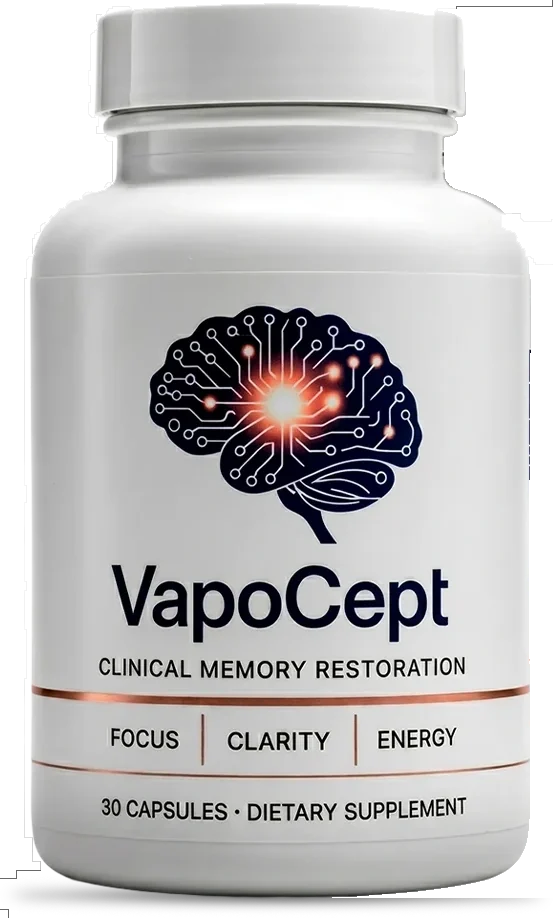
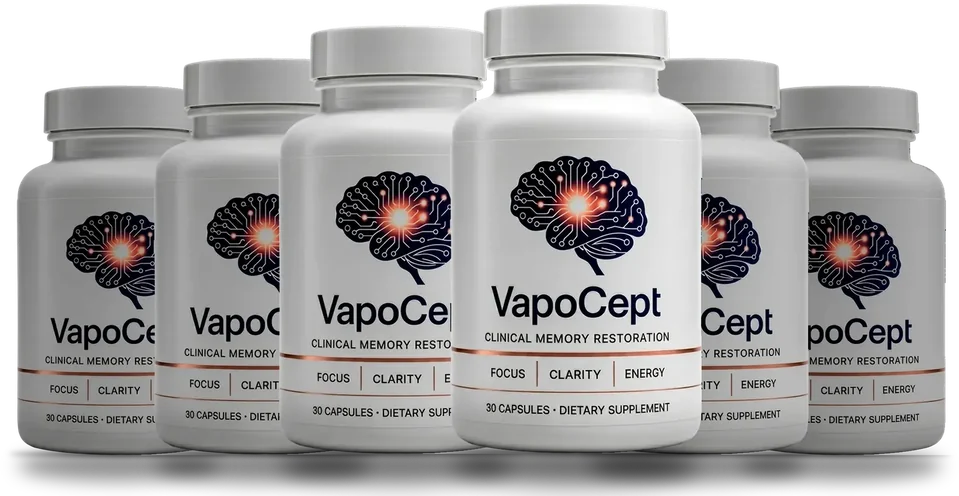
Four lines and a graphic, and that is the whole of it: the wordmark, the phrase “Clinical Memory Restoration”, the words focus, clarity and energy between two copper rules, and then “30 capsules · dietary supplement”. Those four lines, a brain-circuit graphic and two copper rules are the whole of the front of the bottle. There is no asterisk beside any line, and there is no FDA disclaimer on the front in any shot we were given.
The missing asterisk matters more than it looks. On a US supplement label, an asterisk beside a claim is the thread that ties it to the disclaimer required by law — “These statements have not been evaluated by the Food and Drug Administration” — and it is the visual signal that what you are reading is a structure/function claim rather than a medical finding. We print that disclaimer at the foot of every page of this site. We could not find it on the front of this bottle.
The agency’s own wording is short enough to quote whole. A structure/function claim may a structure/function claim may “describe the role of a nutrient or dietary ingredient intended to affect the normal structure or function of the human body, for example, ‘calcium builds strong bones.’” A disease claim is different: a disease claim says a product can “diagnose, treat, cure or prevent any disease”. Only drugs may legally make one. And the agency is explicit that it does not vet either one in advance: These claims “are not pre-approved by FDA, but the manufacturer must have substantiation that the claim is truthful and not misleading and must submit a notification with the text of the claim to FDA no later than 30 days after marketing.”
Read that last sentence twice, because it is the one that decides what the word clinical on a bottle front is worth to you as a buyer. Nobody checked it before the bottle was printed. The seller is required to hold substantiation and to file the wording with the agency within thirty days of going to market, and neither of those things is visible to you at the point of sale.

Nothing in this bottle is a memory ingredient, and no trial of this formula has been published. If the words on the front are the reason you are here, read the seven ingredients first.
The product
VapoCept is a dietary supplement in capsule form, sold in a white bottle of 30 capsules. The published panel gives a serving of one capsule and thirty servings a container, so a bottle is a calendar month and the arithmetic on this product never gets harder than that. The directions are a single sentence: one capsule daily with an 8 oz glass of water.
It is sold in the United States by Govapocept, which describes itself as a “USA Authorized VapoCept Retailer”. The seller’s own wording is “USA Authorized VapoCept Retailer” - it describes a reseller relationship, not a government authorisation. No US agency authorises retailers of dietary supplements. No manufacturer or “Distributed by” line was supplied to us. No back-of-bottle photograph was included in the assets, so there is no label line to read one off.
Here is the part that sets this label apart from almost everything else in the category. The panel does not print a proprietary blend. It prints niacin at 7.5 mg NE, calcium at 18 mg, L-arginine base at 200 mg, L-arginine AKG 2:1 extract at 200 mg, L-citrulline HCl at 100 mg, L-citrulline malate at 100 mg and beta-alanine at 40 mg. Seven rows, seven figures, nothing hidden behind a single total. Added together that is 665.5 mg of declared actives in one capsule, 640 mg of it amino acids.
That choice is what makes the rest of this site possible. Every page here sets an amount against a federal reference figure, and it can only do that because the amounts are printed. A proprietary blend would have made most of this site unwriteable — which is, of course, part of why so many labels use one.
These seven amounts come from the seller’s published panel text. No photograph of the Supplement Facts panel was supplied to us, so we cannot check them against the bottle the way we would prefer to. Read the panel on the bottle when it arrives, and treat anything printed there as the final word over anything printed here.
The honest section
Seven published amounts, each set against the figure on the federal page that covers it. This is the section the label’s own openness makes possible.
| Ingredient | In VapoCept | Reference figure | What that means |
|---|---|---|---|
| Niacin | 7.5 mg NE | RDA 14-16 mg NE | About half a day’s requirement |
| Calcium (as calcium carbonate) | 18 mg | RDA 1,000-1,200 mg | 1.8% of a day’s requirement |
| L-Arginine (base) | 200 mg | Studied at 2-20 g a day | A tenth of the low end |
| L-Arginine AKG 2:1 Extract | 200 mg | No federal page for this form | About 133 mg of arginine by the printed ratio |
| L-Citrulline HCl | 100 mg | Studied at up to 9 g, or 6 g a day | A sixtieth of the 6 g figure |
| L-Citrulline Malate | 100 mg | Same research as above | Free-base citrulline not published |
| Beta-Alanine | 40 mg | Studied at 1.6-6.4 g a day | A fortieth of the low end |
These seven amounts come from the seller’s published panel text. No photograph of the Supplement Facts panel was supplied to us, so we cannot check them against the bottle the way we would prefer to. Read the panel on the bottle when it arrives, and treat anything printed there as the final word over anything printed here.
Here is the part that only becomes visible because the amounts are printed. Beta-alanine is in this capsule at 40 mg; the NIH Office of Dietary Supplements says it has been studied at 1.6 to 6.4 grams a day, which is forty to a hundred and sixty times as much. The two citrulline forms total 200 mg; ODS describes research using up to 9 grams for one day or 6 grams a day for up to 16 days. The two arginine forms total 400 mg; ODS describes studies of 2 to 20 grams a day for up to 3 months. A label that publishes its amounts lets you do that arithmetic. A proprietary blend does not, and that is the argument for this kind of label even when the arithmetic is unflattering.
There is a temptation, when a label does something well, to leave it there. We are not going to, because the two facts are the same fact. This seller chose to print seven numbers instead of one, and printing them is what lets anybody — us, you, a pharmacist, a competitor — hold each one up against the research and see how far short it falls. A label that prints a single blend total avoids that comparison completely. It is not a better product for it. It is just harder to check.
So both things are true at once, and we would rather you had both: this is the most transparent panel in this category we have read, and the amounts on it are a fraction of what the studies used. If you are shopping on disclosure, this label wins. If you are shopping on dose, it does not.
Label versus marketing
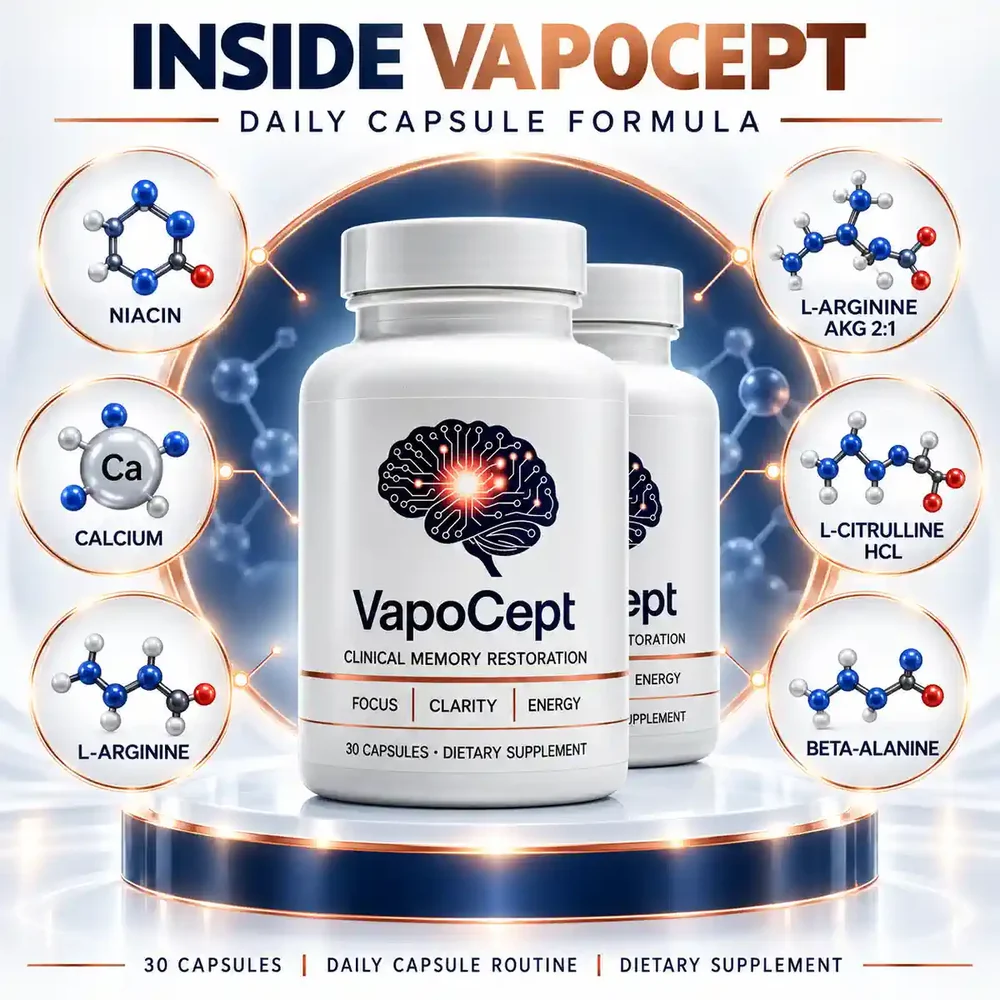
The seller’s published panel names seven ingredients. The “Inside VapoCept” card names six. The “How VapoCept Works” card names the same six. L-citrulline malate appears on the panel text and on neither card. It is a small gap next to the rest of this label’s disclosure, but it is a gap, and the panel is the document that counts.
The “Inside VapoCept” card arranges six molecules around a bottle: niacin, calcium, L-arginine, L-arginine AKG 2:1, L-citrulline HCl and beta-alanine. The “How VapoCept Works” card lays out the same six as ingredient stills in copper frames. Neither one mentions L-citrulline malate, which sits sixth on the published panel at 100 mg.
Set against the rest of this label, that is a small gap — a sixth of one ingredient row, not two whole ingredients kept off the marketing. It is worth writing down anyway, for the same reason we write down everything else: the panel is the document that governs, the picture is an advertisement, and when the two disagree it is always worth knowing which way the disagreement runs.
It also has one practical consequence. If you are checking a product against an allergy, an intolerance or a medicine, the marketing card is not a safe place to do it. Six names is not seven, and the missing one is a citrulline salt with malic acid attached to it.

Credit where it is due
No proprietary blend. Every ingredient carries its own figure, which is the rarest thing on this shelf.
A single fixed serving. No range, no morning-and-evening split, no loading week.
$158, $207 and $294. Most listings in this category publish nothing until checkout.
A stated window with a stated start date, and a phone number to claim through.
+1 (507) 448-8190 for orders, tracking, changes and refunds. Not an email queue.
New York for both, published separately, so a parcel and a question do not go to the same place.
Those six lines are what this seller does better than the category average, and we would rather lead with them than pretend the product has no merits. What follows on this site is the other side of the ledger, set out at the same length.
The mechanism
Five steps from the glass of water to the honest limit of what is known.
The published directions ask for an 8 oz glass, and that is part of the instruction rather than decoration: a capsule needs enough water to clear the throat and open in the stomach rather than higher up. One capsule, once a day, is the whole of the dosing decision on this product.
7.5 mg NE of niacin, 18 mg of calcium, 400 mg across two arginine forms, 200 mg across two citrulline forms and 40 mg of beta-alanine. Because the panel prints each figure, you can compare any one of them to the research without guessing.
This is the mechanism the formula is built on. The NIH Office of Dietary Supplements describes arginine as an amino acid the body uses to make nitric oxide, which widens blood vessels; citrulline is converted to arginine first, which is why it is often sold alongside it. Beta-alanine is used to make carnosine, which helps muscles work harder for longer during intense exercise.
ODS puts it in a sentence: niacin “helps turn the food you eat into the energy you need”. Of the three words printed between the copper rules — focus, clarity, energy — that is the only one with a named ingredient behind it, and 7.5 mg NE is about half an adult’s daily requirement.
Every federal consumer page covering the amino acids in this bottle covers them under exercise and athletic performance. NCCIH, reviewing the supplements that are actually marketed for cognition, reports no conclusive evidence that any of them prevents or slows cognitive decline. The mechanism above is real. It is a circulation and endurance mechanism.
The “How VapoCept Works” card reduces the same thing to four steps: daily use, formula inside, daily routine, follow the label. It is honest as far as it goes, and it goes about as far as any four-panel graphic can. It does not claim a mechanism, which is more restraint than most cards in this category show.
There is no published trial of this formula, so nothing above describes what happens to a person who takes it. It describes what the ingredients are understood to do, at doses that are mostly larger than the ones in this capsule. That gap is the honest answer to “how does it work”, and it is the same answer for almost every multi- ingredient supplement on the market.
The formula
Seven ingredients, in the order the published panel lists them, each one with its own amount. Tap any row to open it: you will find what the ingredient is, what the federal page covering it actually found, the dose that research used, and how far the amount in this capsule sits from it.
Niacin
The only vitamin in the bottle, and the only ingredient here with a published daily requirement to measure it against.
The NIH Office of Dietary Supplements puts it plainly: “Niacin (also called vitamin B3) helps turn the food you eat into the energy you need.” It is measured in niacin equivalents, which is what the NE after the number means.
This is the ingredient behind the word <em>energy</em> on the front of the bottle, and it is the closest thing in here to a defensible reason for it. ODS also notes that severe niacin deficiency causes pellagra, whose symptoms can include “loss of memory” and hallucinations - but that is a deficiency disease, not an argument that extra niacin improves a healthy memory.
In VapoCept: 7.5 mg NE Reference: RDA 16 mg NE for adult men, 14 mg NE for adult women
7.5 mg NE is roughly half an adult’s daily requirement, so this is a top-up rather than a dose. It is also comfortably under the 35 mg upper limit ODS sets for adults.
Calcium
The smallest meaningful number on the panel, and the one most likely to be doing a job other than nutrition.
ODS describes calcium as “a mineral your body needs to build and maintain strong bones”. Calcium carbonate is the cheapest and most common form, and it is also a routine manufacturing excipient - it flows well and fills a capsule.
It is named on both listing cards as one of the six headline ingredients, which is a generous way to describe 18 mg.
In VapoCept: 18 mg Reference: RDA 1,000 mg a day for adults 19-50; 1,200 mg for women 51-70 and everyone over 70
18 mg is 1.8 per cent of an adult’s daily requirement. A single cup of milk carries roughly sixteen times as much. If you are taking this for calcium, you are not taking enough of it to matter.
L-Arginine (base)
The largest single amount in the bottle, tied with the AKG form.
ODS describes arginine as “an amino acid in foods that contain protein”. The body uses it to make nitric oxide, which widens blood vessels - which is why it is a fixture of pre-workout formulas.
Wider vessels mean more blood flow, and more blood flow is the mechanism every product of this shape leans on. Read what ODS actually found, though: arginine supplements have “little to no effect on strengthening and muscle-building exercises (like bodybuilding) or aerobic activities”. The federal summary of this ingredient is about exercise. There is no federal summary of it for memory.
In VapoCept: 200 mg Reference: 2 to 20 grams a day for up to 3 months
200 mg is one tenth of the smallest amount in that range, and one hundredth of the largest. Add the AKG form and you reach 400 mg, which is still a fifth of the low end.
L-Arginine AKG 2:1 Extract
The second arginine on the panel, in a different salt.
AKG is alpha-ketoglutarate. The 2:1 describes the ratio of arginine to AKG in the compound, so a 200 mg dose carries roughly 133 mg of arginine and 67 mg of AKG. That arithmetic is ours, from the ratio the panel prints.
It is sold on the theory that the AKG salt is absorbed better than arginine base. Whether that is true at these amounts is not something any federal page addresses, because no federal page covers arginine AKG at all.
In VapoCept: 200 mg Reference: No federal consumer page covers this form
Counting both arginine forms, the capsule holds about 333 mg of actual arginine. ODS describes research from 2 grams a day upward.
L-Citrulline HCl
The first of two citrulline forms, and the ingredient with the most interesting federal write-up in the bottle.
ODS explains the chain: the body converts citrulline to arginine, and arginine to nitric oxide. Taking citrulline is an indirect way of raising arginine.
Because it is indirect, it is often described as the better of the two. ODS is careful: the research is “limited”, and citrulline “might help improve, hinder, or have no effect on performance”. That sentence is worth reading twice - it includes the possibility of making things worse.
In VapoCept: 100 mg Reference: Up to 9 grams for 1 day, or 6 grams a day for up to 16 days
100 mg here, 200 mg counting both forms. That is one thirtieth of the 6 gram figure.
L-Citrulline Malate
The seventh ingredient - the one on the panel text and on neither marketing card.
The same amino acid as the row above it, bound to malic acid instead of hydrochloride. Malate ratios vary between products and this panel does not print one, so how much of the 100 mg is citrulline is not published.
It is the only gap in an otherwise complete disclosure: the “Inside VapoCept” card names six ingredients and this is the one it leaves out, and the “How VapoCept Works” card leaves it out too. The panel is the document that counts, so it is published here.
In VapoCept: 100 mg Reference: Covered by the same ODS citrulline research as the row above
Two citrulline salts at 100 mg each is 200 mg of salt, not 200 mg of citrulline. The free-base figure is not published for either row.
Beta-Alanine
The smallest amino acid amount on the panel, and the widest gap between what is in the capsule and what was studied.
ODS explains that the body uses beta-alanine to make carnosine, which helps muscles work harder for longer during intense exercise.
It is a performance ingredient, straightforwardly. ODS reports that “some, but not all, studies” show “small performance improvements in swimming and team sports”. Nothing in that sentence is about memory, focus or clarity.
In VapoCept: 40 mg Reference: 1.6 to 6.4 grams a day for 4 to 8 weeks
40 mg is one fortieth of the low end of that range and one hundred and sixtieth of the high end. This is the number that most clearly shows what publishing your amounts costs a seller - and why publishing them is still the right thing to do.
Two of the seven — niacin and calcium — have their own NIH consumer fact sheets with published daily requirements, so the comparison there is exact. Three more — arginine, citrulline and beta-alanine — share a single fact sheet, and its title tells you what it is about: Dietary Supplements for Exercise and Athletic Performance. Arginine AKG has no federal consumer page at all, and citrulline malate is covered only by the general citrulline research.
The full ingredients page takes each of the seven apart at length, including the ratio arithmetic on the AKG form.
How much
The published directions are a single sentence: one capsule daily with an 8 oz glass of water. There is no range and no second option, which makes this the easiest product in this category to dose correctly and the easiest to compare against a research figure. Thirty capsules a bottle, one a day, is thirty days.
Compare that to almost anything else on this shelf. A label that says “one or two capsules” leaves you choosing your own dose and makes the cost per day a range rather than a number. This one does not. Thirty capsules, one a day, thirty days — so a bottle is a month, the six-bottle pack is half a year, and every price on this site divides cleanly.
No time of day is published. No food instruction is published beyond the glass of water. No storage line was supplied, no warnings panel was supplied, and no expiry date was supplied, because no photograph of the back or base of the bottle was included in the material we were given. The practical answer to all of those is the same: read the bottle when it arrives, and let it overrule anything here.
| Ingredient | In one VapoCept capsule | Studied or recommended | Note |
|---|---|---|---|
| Niacin | 7.5 mg NE | RDA 14-16 mg NE for adults | About half a day’s requirement. Upper limit is 35 mg. |
| Calcium (as calcium carbonate) | 18 mg | RDA 1,000-1,200 mg for adults | 1.8 per cent of a day’s requirement. |
| L-Arginine (base) | 200 mg | Studied at 2 to 20 g a day for up to 3 months | A tenth of the smallest studied amount. |
| L-Arginine AKG 2:1 Extract | 200 mg | No federal consumer page for this form | About 133 mg of arginine by the panel’s own 2:1 ratio. |
| L-Citrulline HCl | 100 mg | Studied at up to 9 g for 1 day, or 6 g a day | ODS: might help improve, hinder, or have no effect. |
| L-Citrulline Malate | 100 mg | Same research as the row above | The free-base citrulline share is not published. |
| Beta-Alanine | 40 mg | Studied at 1.6 to 6.4 g a day for 4 to 8 weeks | A fortieth of the low end. Tingling starts at 800 mg. |
One capsule a day is the whole of the published dosing instruction.
The panel
This is the panel as the seller publishes it, transcribed row for row. It is short, and every row carries a number.
These seven amounts come from the seller’s published panel text. No photograph of the Supplement Facts panel was supplied to us, so we cannot check them against the bottle the way we would prefer to. Read the panel on the bottle when it arrives, and treat anything printed there as the final word over anything printed here.
Add the seven figures and you get 665.5 mg of declared actives in a single capsule, of which 640 mg is amino acids across five rows. That is a full capsule by the standards of the format, and it is worth noting that the other-ingredients line — the fillers, flow agents and shell that make up the rest of the weight — was not supplied to us at all.
Not published. No panel photograph was supplied.
Not published. This is why the vegetarian seal cannot be checked.
Not published.
Not published. No warnings panel was supplied.
Not published.
Not published. No shot of the bottle base was supplied.
Not published. No manufacturer is named anywhere.
Not visible on the front of the bottle in any supplied shot.
Eight ordinary label lines, none of them published. Individually each is a small gap. Together they mean that the only part of this product we can describe with confidence is the part the seller chose to type out — which happens to be the best part. The supplement facts page goes through each missing line and what it would have told you.
The claims
Three supports named, four lines printed, and one of them with evidence attached.
Three supports are named in the seller’s material:
And four lines are printed on the front of the bottle: the wordmark, “Clinical Memory Restoration”, “Focus | Clarity | Energy” and “30 capsules · dietary supplement”.
Niacin is in the capsule at 7.5 mg NE, and the NIH Office of Dietary Supplements describes its job in a single sentence: it “helps turn the food you eat into the energy you need”. That is nutrition rather than stimulation — there is no caffeine on this panel and nothing else on it is a stimulant — and 7.5 mg NE is roughly half an adult’s daily requirement rather than a large dose. But it is a real ingredient doing a documented job, and of the three words on the label it is the one we can point at something for.
No ingredient on this panel has a federal consumer page covering focus, clarity, attention or recall. The four amino acids appear in a fact sheet about exercise and athletic performance. Calcium builds bones. Niacin turns food into energy. NCCIH, reviewing the whole cognitive-supplement category, reports no conclusive evidence that any of it prevents or slows cognitive decline, and adds the instruction that matters most: “Don’t use complementary health approaches as a reason to postpone seeing a health care provider about memory loss.”
The balance
Nine things this label does that most of its category does not, and ten that should slow you down.
Fit
Three groups this product genuinely suits.
This label gives you seven ingredients and seven numbers. You can check every one of them against a federal page before you spend anything, which is exactly what the rest of this site does. Whatever else is true about this product, it did not hide its formula.
One capsule, daily, with a glass of water. Thirty capsules is a calendar month. No range, no morning-and-evening split, no food requirement published.
Sixty days from purchase, printed on the sales page, with a US phone line to claim through. Most products in this category point vaguely at a marketplace return policy instead.
And five it does not. The first is the important one.
This is the exclusion that matters most. The seven ingredients are a nitric-oxide and endurance formula. The federal consumer summaries that cover the amino acids in this bottle cover them under exercise and athletic performance, and NCCIH reports no conclusive evidence that supplements prevent or slow cognitive decline. The words on the front of the bottle are not evidence.
NCCIH’s own instruction is the plainest sentence on this subject anywhere: “Don’t use complementary health approaches as a reason to postpone seeing a health care provider about memory loss.” MedlinePlus adds: if you are worried about your forgetfulness, see your health care provider. A capsule is not a substitute for that appointment.
40 mg of beta-alanine against 1.6 to 6.4 grams studied. 200 mg of citrulline against 6 grams a day. If you are buying amino acids for a training effect, the amounts here are a fraction of what the research used, and the label tells you so itself.
The packaging carries a vegetarian roundel and no other-ingredients line was published, so the capsule shell is unknown. That is not a contradiction, it is a blank - but it is a blank in exactly the place a vegetarian needs an answer.
The product is for adults 18 and over. No warnings panel was supplied for this label at all, which is itself a reason to ask a clinician rather than guess.
The routine
Not the date the parcel arrives, and not the date you take the first capsule. The 60-day window runs from purchase, so that is the date the clock is counting from. Put it in your phone with a reminder for day 55.
The full published instruction, and the only dosing decision on this product. There is no second serving and no range.
No time of day is published, so the useful rule is the one that holds: attach it to something you already do every day. A once-daily product lives or dies on whether you remember it.
Before you start, write one sentence about what you would expect to notice. Without it, eight weeks later you will be judging the product against a memory of how you felt, which is exactly the thing this product is being sold to improve.
If you bought six bottles you will have four left when the window shuts. The product running out and the refund running out are two different dates on this purchase, and only one of them is negotiable.
The how-to-use page covers missed days, taking it with food, whether the capsule can be opened, and what a fair eight-week trial of any daily supplement looks like.
The format
A capsule is the ordinary form for this category, and it comes with the ordinary trade-offs. It is easy to dose exactly, it hides taste completely, and it is harder to swallow than a liquid or a chewable. On this product the format has one extra consequence worth knowing about.
No other-ingredients line was supplied. Without a panel photograph we cannot tell you what the capsule shell is made of, what fillers or flow agents are in it, or whether it contains any allergen. If that matters to you - and if you are vegetarian it does - read the bottle before you take the first capsule.
This is why the vegetarian roundel in the packaging artwork cannot be checked. We are not saying the seal is wrong — we have no evidence either way, and it would be just as unfair to call it false as to repeat it as fact. We are saying that the one line that would settle it was not supplied, and that a vegetarian buyer should read the bottle before the first capsule rather than trusting a roundel.
Five amino acid rows totalling 640 mg, plus a vitamin and a mineral, is a well-filled capsule. If you find capsules difficult, that is worth knowing before you buy six bottles of them, and the sales line on +1 (507) 448-8190 is the published place to ask whether any other format exists.

Comparison
| VapoCept | Most of the category | What the difference is worth |
|---|---|---|
| VapoCept: capsule | Most memory supplements: capsule | The ordinary form for the category. |
| Yes - 1 capsule | Usually yes | And a single fixed serving rather than a range, which is better than usual. |
| Yes - all seven | Usually a proprietary blend | The strongest thing about this label, by a distance. |
| None | Common | Nothing is hidden behind a single total here. |
| No | Usually yes | So the amounts cannot be checked against the bottle before it arrives. |
| Not published | Usually printed | Which leaves the capsule shell, and the vegetarian seal, unverifiable. |
| Yes - $158, $207, $294 | Often hidden until checkout | Three real numbers. Confirm them on the listing before you pay. |
| 60 days from purchase | Often unstated | A real length with a real start date. |
| Yes, +1 (507) 448-8190 | Often email only | And in this case the phone is the only published route for order questions. |
| None published | None published | Ordinary for the category - but this bottle prints the word clinical. |
Ten rows. This product wins five of them outright and loses three.
Read the table as two separate stories. On disclosure and on buying terms, this seller is doing better than the category average by a clear margin: published amounts, no proprietary blend, three published prices, a stated window with a stated start date, and a phone number that is not an email queue. On what was photographed and on what the formula has behind it, it is doing worse: no panel shot, no other-ingredients line, no warnings, no manufacturer, and a front-of-bottle phrase with no trial attached.
The packs
Three published pack prices — the first product in this series we have been able to print prices for. Confirm them on the listing before you pay.
Smallest pack with a published price
60 capsules · 60 days

60 days at one capsule a day
Middle pack
90 capsules · 90 days

90 days at one capsule a day
Lowest cost a bottle, per the seller
180 capsules · 180 days

180 days at one capsule a day
Prices were supplied for this product, which is unusual enough in this category to be worth saying out loud: $158 for two bottles, $207 for three and $294 for six. No single-bottle price was supplied, so the cheapest published way in is two bottles. Every figure on this page is the seller’s, not ours, and the listing is the only place the number you will actually be charged is binding. Check it before you pay.
One capsule a day means a bottle is a month and the arithmetic is simple. Two bottles at $158 is $2.63 a day. Three at $207 is $2.30 a day. Six at $294 is $1.63 a day. The six-bottle pack is the cheapest per day and the worst fit for the guarantee: the window is 60 days from purchase, and six bottles is 180 days of product.
No price was supplied for a single bottle. If you want to try one month before committing to six, ask the sales line on +1 (507) 448-8190 whether a single bottle is sold at all.
The arithmetic
| Pack | Total | A bottle | Days of product | Cost a day | Days outside the 60-day window |
|---|---|---|---|---|---|
| 2 bottles | $158 | $79 | 60 | $2.63 | 0 — they end together |
| 3 bottles | $207 | $69 | 90 | $2.30 | 30 days |
| 6 bottles | $294 | $49 | 180 | $1.63 | 120 days |
The last column is the one most buyers do not look at before paying.
Set the window against the packs. Two bottles is 60 days of product and a 60-day window - they end together. Three bottles is 90 days, so the last month falls outside it. Six bottles is 180 days: when the window closes you will have taken two bottles and four will still be sealed. If you are buying six, decide by day 60 whether to claim, not by the time the product runs out.
There is no trick in that column and no reason to think the seller intends one. It is simply what happens when a product is sold in six-month quantities against a two-month guarantee, which is normal across this whole category. The only defence is to treat day 60 as a decision date in its own right rather than waiting for the bottles to run out.
Two, three or six bottles. Each bottle is 30 capsules — one a day, 30 days. $158, $207 or $294, which is $2.63, $2.30 or $1.63 a day.
Compare the three packsSafety
Start with the gap, because it is the honest place to start: no warnings panel was supplied for this product. No caution line, no interaction note, no pregnancy statement, no storage instruction. That is not a clean bill of health, it is a missing document, and it means the notes below come from the federal pages covering each ingredient rather than from the bottle.
Niacin is here at 7.5 mg NE against an upper limit of 35 mg a day for adults, so this capsule is a small contribution. ODS notes that high doses of niacin can cause nausea, heartburn, abdominal pain and liver problems; those effects are associated with amounts many times this one. Calcium is at 18 mg against an upper limit of 2,000 to 2,500 mg depending on age, which is not close to anything.
On the amino acids, ODS reports that arginine appears to be safe at doses up to 9 grams a day — this capsule has about 400 mg across two forms. On citrulline the agency is blunter: “Not enough research to know for sure whether it’s safe.” On beta-alanine, the well-known tingling in the face, neck, hands and upper trunk is associated with doses of 800 mg or more and lasts 60 to 90 minutes; at 40 mg you are twenty times under that threshold, so it is unlikely here.
Two arginine forms and two citrulline forms in one capsule all point at the same pathway: nitric oxide, which widens blood vessels. That is also the pathway several blood-pressure medicines work on. The amounts here are small, but the right move is still to take the bottle to whoever prescribes for you rather than to reason about it yourself. NCCIH’s standing advice covers the general case: “Take charge of your health - talk with your health care providers about any complementary health approaches you use.”
Adults 18 and over. If you are pregnant, breastfeeding or managing a health condition, ask first. The side effects page goes through each ingredient in turn.
NCCIH: “Don’t use complementary health approaches as a reason to postpone seeing a health care provider about memory loss.” MedlinePlus adds: “If you’re worried about your forgetfulness, see your health care provider.” No capsule is a substitute for that appointment, and this one is not marketed by us as though it were.
Timeline
Nothing below describes what the product does, because no trial of it has been published. It describes how to run a fair trial of your own, and where the refund deadline falls inside it.
One capsule, one glass of water, same time each day. There is no range to settle and no second serving to remember. Write the purchase date somewhere you will find it, because the 60-day window starts from that date rather than from this capsule.
What is not known: Nothing is published about what week one does.
Four weeks is about the shortest honest window for a daily supplement, and here it is also most of a bottle. The seller’s own listing says buyers most often waited three to six weeks, so this is where expectation is being set rather than effect.
What is not known: No trial of this formula exists to compare against.
Day 60 is the last day of the guarantee. If you bought two bottles, the product and the window run out together. If you bought six, you will be four bottles ahead of the deadline and will have to decide with four of them still sealed.
What is not known: The window runs from purchase, not from your first capsule.
If nothing has changed after two months of daily use, that is an answer, and the refund route has closed. If what you are chasing is memory rather than energy, NCCIH’s line is the one to act on.
What is not known: NCCIH: do not use a supplement as a reason to postpone seeing a health care provider about memory loss.
The direct question
It is a fair question to ask about anything sold this way, and the honest answer here has two halves that point in different directions.
A seller running a scam does not publish seven individual ingredient amounts. Printing your numbers is the single most checkable thing a supplement label can do, and it is what allowed every unflattering comparison on this page to be made. Nor does a scam usually publish three pack prices, a guarantee length with a start date, a US phone line, an office address and a separate returns address. Those are the marks of a business that expects to be contacted.
The front of the bottle prints the word clinical and there is no trial. The seven ingredients are a nitric-oxide and endurance formula sold under a memory headline. The amounts, once you can see them, are a fraction of the research doses. A doctor-formulated seal names no doctor and a guaranteed-pure roundel has no test behind it. And no photograph of the Supplement Facts panel was supplied, which means the good disclosure we have been praising is disclosure we have not been able to verify against a bottle.
This is not a fake product with a fake label. It is a real capsule with an unusually honest panel and a front-of-bottle claim its own formula does not support. Those are different problems with different answers, and the answer to the second one is to buy it, if you buy it at all, for what is printed on the panel rather than for what is printed on the front.
Ordering
Govapocept is a USA Authorized VapoCept Retailer, and the order button on this site points at the seller’s own sales page. The seller’s own wording is “USA Authorized VapoCept Retailer” - it describes a reseller relationship, not a government authorisation. No US agency authorises retailers of dietary supplements.
The order button points at the VapoCept sales page. That address is an affiliate path, which means this site earns a commission if you buy through it. We do not print the address as text anywhere, and the earnings disclosure is on the disclaimer page.
Three things, and none of them is obvious at the moment you pay. The 60-day window is the seller’s promise on the seller’s own sales page, so a third-party storefront is under no obligation to honour it. The sales line on +1 (507) 448-8190 matches orders to batches, and it can only do that for orders it has a record of. And the lot code on a bottle is only worth checking against a seller who can tell you what it means.
The where-to-buy page covers counterfeits, the two screenshots worth taking before you pay, and what an authorised retailer is and is not.
Reviews
The seller’s figures, not ours
The pack we were given lists eight buyers by first name, age and city. <strong>Four of the eight carry the same sentence word for word</strong> - “Daily habit stuck. Reordered before the last bottle.” - and <strong>three more share a second sentence</strong>, “Fair at a month. Wanted more in week one.” Seven of eight named people writing two sentences between them is layout copy, not testimony. We have not published any of the eight, and there is no aggregate rating in this page’s structured data. The seller’s own published figures are below, labelled as theirs.
How we source a factStraight answers
Taken from the seller’s own listed likes and dislikes, and answered from the label rather than around it.
Nothing we were given supports that. The seven ingredients are niacin, calcium and four amino acids in a nitric-oxide and endurance arrangement. The federal consumer pages that cover those amino acids cover them under exercise and athletic performance. NCCIH, reviewing supplements sold for cognition, reports no conclusive evidence that any prevents or slows cognitive decline.
On its own, nothing. No clinical trial of this formula was supplied to us and none is published anywhere we could find. The FDA does not pre-approve claims on supplement labels; it requires the seller to hold substantiation and to notify the agency within 30 days of marketing. Neither of those is visible to you as a buyer.
The NIH Office of Dietary Supplements describes beta-alanine research at 1.6 to 6.4 grams a day for four to eight weeks. 40 mg is a fortieth of the low end. One practical upside: the tingling ODS associates with 800 mg or more is unlikely at this amount.
Because no other-ingredients line and no panel photograph were supplied. We could guess and we will not. If you are vegetarian, that blank is the thing to resolve before the first capsule, and the bottle in your hand will answer it.
It is the cheapest per day at $1.63. It is also 180 days of product against a 60-day guarantee, so two thirds of what you bought sits outside any refund route. If you have not taken this before, the two-bottle pack and the window end on almost the same day.
Correct - none was supplied. The published prices start at two bottles for $158. Ask the sales line on +1 (507) 448-8190 whether a single bottle is sold at all before assuming it is not.
Money back
The pack states a 60-day guarantee from the date of purchase, printed on the sales and info page. That is a real number, and it is the first one in this series we have been able to print. Note where it starts: from purchase, not from your first capsule. If the parcel takes a week to arrive and you leave it on a shelf for a fortnight, three of the sixty days are already gone before you start.
Call +1 (507) 448-8190 with your order ID. Returns go to 75 Ninth Avenue, Floor 3, New York, NY 10011. Include your full name, the email on the order and the order ID. Return postage is paid by the buyer. Use a tracked service. Refunds are credited 3 to 5 business days after the desk approves them, then 5 to 10 days for the card to post it.
There is no sales email address. No sales email address was supplied. The pack points to the sales contact page instead. For anything about an order, the phone line is the published route. The website desk at [email protected] handles this site — pages, typos, privacy and press — and sending a refund request there will only slow it down.
It is a seller’s promise, not a regulator’s rule. No agency enforces a supplement money-back window, which is why the practical advice is always the same: read it on the listing before you pay, screenshot it with the date showing, and keep the order email. Sixty days is a real and reasonable figure. Having a screenshot of it costs you nothing.

The verdict
Eight rows, scored on what is published rather than on what is promised. The highest and lowest scores on this card are two sides of the same decision by the seller.
| What we scored | Mark | Why |
|---|---|---|
| Ingredient disclosure | 9/10 | Seven ingredients, seven individual amounts, no proprietary blend. This is the best ingredient disclosure we have seen on a label in this category, and it is the reason the rest of this page can be as specific as it is. It loses a point for the missing other-ingredients line, which means the capsule shell is unknown. |
| Agreement between label and marketing | 3/10 | The front of the bottle says Clinical Memory Restoration. The formula inside is arginine, arginine AKG, two citrulline salts and beta-alanine - the standard contents of a pre-workout. Both marketing cards also drop L-citrulline malate from the list. The disclosure is excellent; what the disclosure reveals is a mismatch. |
| Dosing clarity | 10/10 | One capsule daily with an 8 oz glass of water. No range, no window, no “one to two”. Thirty capsules is thirty days. Nothing in this series has been this easy to follow or this easy to cost out. |
| Amounts against the research | 2/10 | Beta-alanine at 40 mg against a studied 1.6 to 6.4 grams. Citrulline at 200 mg against 6 grams a day. Arginine at 400 mg against 2 to 20 grams. The amounts are published, which is to the seller’s credit, and they are a fraction of what the federal pages describe. |
| Price clarity | 8/10 | Prices were supplied: $158, $207 and $294 for two, three and six bottles. That is three published numbers where most listings in this category give none. No single-bottle price was supplied, which is the one gap. |
| Money-back window | 7/10 | Sixty days from purchase, stated on the sales page. A real number with a real start date. It loses points against the six-bottle pack, which is 180 days of product sold against a 60-day window. |
| Support and contact | 8/10 | A US sales line, a website email with published hours, an office address and a separate returns address. No sales email address is published, which is the one weak point - everything about an order has to go through a phone call. |
| Published evidence for this formula | 1/10 | No trial of this formula has been published, and the word <em>clinical</em> on the front of the bottle is not a citation. Of the seven ingredients, the four amino acids appear in a federal summary about exercise performance, and the findings there are cautious at doses many times larger than these. |
Plainly
Seven ingredients, seven amounts, no proprietary blend. That is the best disclosure in this category we have written about. It is also what lets anyone see that the formula does not match the words on the front of the bottle.
Arginine, arginine AKG, two citrulline salts and beta-alanine are a nitric-oxide and endurance formula. Every federal page covering them covers them under exercise performance. Niacin’s published role is turning food into energy.
Beta-alanine 40 mg against 1.6 to 6.4 g. Citrulline 200 mg against 6 g a day. Arginine 400 mg against 2 to 20 g. You can only know that because the label printed its numbers.
Every amount on this site comes from the seller’s published panel text. Until you read the bottle, treat all of it as second-hand - and treat the bottle as the final word.
Sixty days from purchase is a real, stated guarantee. One hundred and eighty days of product is what the cheapest pack contains. Decide by day 60 either way.
About
This site is run by Govapocept, a USA Authorized VapoCept Retailer in the United States. It is a product information site: its job is to print what the label and the seller’s own material say, check each claim against a federal reference page where one exists, and write “not published” wherever a fact is missing rather than filling the gap with something plausible.
The order button points at the VapoCept sales page. That address is an affiliate path, which means this site earns a commission if you buy through it. We do not print the address as text anywhere, and the earnings disclosure is on the disclaimer page.
Contact: [email protected], Monday to Friday, 9:00am - 5:00pm ET, for anything about these pages. For anything about an order, +1 (507) 448-8190. If the bottle in your hand disagrees with something written here, tell us — the label is the document that wins, and we would rather correct a page than defend one.
References
Ten federal reference pages, each read on September 22, 2026. Every quotation on this site comes from one of them.
Questions
Eleven of the sixty-one on the full FAQ page.
VapoCept is a dietary supplement sold as a capsule, 30 capsules to a white bottle. The published panel names seven ingredients - niacin, calcium, two forms of L-arginine, two forms of L-citrulline and beta-alanine - each with its own amount. The front of the bottle prints “Clinical Memory Restoration”, and the seller names daily mental clarity, sustained energy and cognitive well-being as what it supports.
Seven things, all with published amounts: niacin 7.5 mg NE, calcium (as calcium carbonate) 18 mg, L-arginine base 200 mg, L-arginine AKG 2:1 extract 200 mg, L-citrulline HCl 100 mg, L-citrulline malate 100 mg and beta-alanine 40 mg. Added together that is 665.5 mg of declared actives a capsule.
No, and that is the best thing about this label. Every ingredient carries its own number, which means you can check each one against a federal reference page yourself. Most products in this category publish a single blend total and leave the split unstated.
It is a phrase printed on the front of the bottle under the wordmark. No clinical trial of this formula was supplied to us and we could not find one published. The word clinical on packaging is not a citation, and the seven ingredients inside are a nitric-oxide and endurance formula rather than a memory formula.
Nothing we were given supports that. The ingredients are a nitric-oxide and endurance formula; the federal consumer pages covering them are about exercise and athletic performance. NCCIH reports no conclusive evidence that supplements prevent or slow cognitive decline, and says plainly not to use them as a reason to postpone seeing a provider about memory loss.
One capsule daily with an 8 oz glass of water. That is the whole of the published directions - there is no range, no second serving and no food instruction. Thirty capsules is thirty days.
The supplied prices are $158 for two bottles ($79 each), $207 for three ($69 each) and $294 for six ($49 each). No single-bottle price was supplied. Those are the seller’s figures; the listing is where the number you will actually be charged is binding, so check it before you pay.
Sixty days from the date of purchase, as printed on the sales and info page. Note the start point: it runs from when you paid, not from your first capsule. Shipping time and any delay in starting come out of the sixty days.
No warnings panel was supplied for this product, which is a gap rather than a reassurance. The published amounts are small: niacin is well under its 35 mg upper limit and calcium is a fraction of its own. ODS says arginine appears safe up to 9 grams a day and that there is not enough research to know whether citrulline is safe.
We cannot tell you. A vegetarian roundel appears in the packaging artwork, but no other-ingredients line was supplied and no panel photograph was included, so the capsule shell is unknown. On a capsule product that is usually the deciding ingredient. Read the bottle before the first capsule.
Because the review block we were given does not survive reading. Eight named buyers are listed; four of them share one sentence word for word and three more share a second. That is layout copy, not testimony. The seller’s own published figures appear on the reviews page, labelled as theirs, and there is no aggregate rating in this site’s structured data.
Capsules, 30 capsules a bottle, one a day, 30 days. Seven ingredients, seven published amounts, no proprietary blend. $158 for two bottles, $207 for three or $294 for six, with 60 days from purchase to change your mind. Sales line +1 (507) 448-8190.
$158 / $207 / $294 on the listing · 60-day window from purchase · ships from inside the US · sales line +1 (507) 448-8190