Official product information
VapoCept Ingredients: All Seven, With Their Amounts
All seven ingredients with the amount printed beside each one, checked against the federal page that covers it.
Written and reviewed by the VapoCept Editorial Desk · Last updated September 22, 2026
Quick answer
The published VapoCept panel names seven ingredients, each with its own amount: niacin 7.5 mg NE, calcium 18 mg, L-arginine base 200 mg, L-arginine AKG 200 mg, L-citrulline HCl 100 mg, L-citrulline malate 100 mg and beta-alanine 40 mg. There is no proprietary blend, so every number can be checked — and every one is a fraction of the studied dose.
The formula
Every VapoCept ingredient, in the panel’s printed order
Seven ingredients read off the published panel, in its own order.
Begin with the part this label gets right, because it is rarer than it should be. The published panel names seven ingredients and prints a separate amount beside every one of them: no proprietary blend, no single total standing in for a list, nothing hidden. Seven names, seven numbers, and a number you can read is a number you can check.
Niacin
The only vitamin in the bottle, and the only ingredient here with a published daily requirement to measure it against.
7.5 mg NE
Niacin
The only vitamin in the bottle, and the only ingredient here with a published daily requirement to measure it against.
The NIH Office of Dietary Supplements puts it plainly: “Niacin (also called vitamin B3) helps turn the food you eat into the energy you need.” It is measured in niacin equivalents, which is what the NE after the number means.
This is the ingredient behind the word <em>energy</em> on the front of the bottle, and it is the closest thing in here to a defensible reason for it. ODS also notes that severe niacin deficiency causes pellagra, whose symptoms can include “loss of memory” and hallucinations - but that is a deficiency disease, not an argument that extra niacin improves a healthy memory.
In VapoCept: 7.5 mg NE Reference: RDA 16 mg NE for adult men, 14 mg NE for adult women
7.5 mg NE is roughly half an adult’s daily requirement, so this is a top-up rather than a dose. It is also comfortably under the 35 mg upper limit ODS sets for adults.
Calcium
The smallest meaningful number on the panel, and the one most likely to be doing a job other than nutrition.
18 mg
Calcium
The smallest meaningful number on the panel, and the one most likely to be doing a job other than nutrition.
ODS describes calcium as “a mineral your body needs to build and maintain strong bones”. Calcium carbonate is the cheapest and most common form, and it is also a routine manufacturing excipient - it flows well and fills a capsule.
It is named on both listing cards as one of the six headline ingredients, which is a generous way to describe 18 mg.
In VapoCept: 18 mg Reference: RDA 1,000 mg a day for adults 19-50; 1,200 mg for women 51-70 and everyone over 70
18 mg is 1.8 per cent of an adult’s daily requirement. A single cup of milk carries roughly sixteen times as much. If you are taking this for calcium, you are not taking enough of it to matter.
L-Arginine (base)
The largest single amount in the bottle, tied with the AKG form.
200 mg
L-Arginine (base)
The largest single amount in the bottle, tied with the AKG form.
ODS describes arginine as “an amino acid in foods that contain protein”. The body uses it to make nitric oxide, which widens blood vessels - which is why it is a fixture of pre-workout formulas.
Wider vessels mean more blood flow, and more blood flow is the mechanism every product of this shape leans on. Read what ODS actually found, though: arginine supplements have “little to no effect on strengthening and muscle-building exercises (like bodybuilding) or aerobic activities”. The federal summary of this ingredient is about exercise. There is no federal summary of it for memory.
In VapoCept: 200 mg Reference: 2 to 20 grams a day for up to 3 months
200 mg is one tenth of the smallest amount in that range, and one hundredth of the largest. Add the AKG form and you reach 400 mg, which is still a fifth of the low end.
L-Arginine AKG 2:1 Extract
The second arginine on the panel, in a different salt.
200 mg
L-Arginine AKG 2:1 Extract
The second arginine on the panel, in a different salt.
AKG is alpha-ketoglutarate. The 2:1 describes the ratio of arginine to AKG in the compound, so a 200 mg dose carries roughly 133 mg of arginine and 67 mg of AKG. That arithmetic is ours, from the ratio the panel prints.
It is sold on the theory that the AKG salt is absorbed better than arginine base. Whether that is true at these amounts is not something any federal page addresses, because no federal page covers arginine AKG at all.
In VapoCept: 200 mg Reference: No federal consumer page covers this form
Counting both arginine forms, the capsule holds about 333 mg of actual arginine. ODS describes research from 2 grams a day upward.
L-Citrulline HCl
The first of two citrulline forms, and the ingredient with the most interesting federal write-up in the bottle.
100 mg
L-Citrulline HCl
The first of two citrulline forms, and the ingredient with the most interesting federal write-up in the bottle.
ODS explains the chain: the body converts citrulline to arginine, and arginine to nitric oxide. Taking citrulline is an indirect way of raising arginine.
Because it is indirect, it is often described as the better of the two. ODS is careful: the research is “limited”, and citrulline “might help improve, hinder, or have no effect on performance”. That sentence is worth reading twice - it includes the possibility of making things worse.
In VapoCept: 100 mg Reference: Up to 9 grams for 1 day, or 6 grams a day for up to 16 days
100 mg here, 200 mg counting both forms. That is one thirtieth of the 6 gram figure.
L-Citrulline Malate
The seventh ingredient - the one on the panel text and on neither marketing card.
100 mg
L-Citrulline Malate
The seventh ingredient - the one on the panel text and on neither marketing card.
The same amino acid as the row above it, bound to malic acid instead of hydrochloride. Malate ratios vary between products and this panel does not print one, so how much of the 100 mg is citrulline is not published.
It is the only gap in an otherwise complete disclosure: the “Inside VapoCept” card names six ingredients and this is the one it leaves out, and the “How VapoCept Works” card leaves it out too. The panel is the document that counts, so it is published here.
In VapoCept: 100 mg Reference: Covered by the same ODS citrulline research as the row above
Two citrulline salts at 100 mg each is 200 mg of salt, not 200 mg of citrulline. The free-base figure is not published for either row.
Beta-Alanine
The smallest amino acid amount on the panel, and the widest gap between what is in the capsule and what was studied.
40 mg
Beta-Alanine
The smallest amino acid amount on the panel, and the widest gap between what is in the capsule and what was studied.
ODS explains that the body uses beta-alanine to make carnosine, which helps muscles work harder for longer during intense exercise.
It is a performance ingredient, straightforwardly. ODS reports that “some, but not all, studies” show “small performance improvements in swimming and team sports”. Nothing in that sentence is about memory, focus or clarity.
In VapoCept: 40 mg Reference: 1.6 to 6.4 grams a day for 4 to 8 weeks
40 mg is one fortieth of the low end of that range and one hundred and sixtieth of the high end. This is the number that most clearly shows what publishing your amounts costs a seller - and why publishing them is still the right thing to do.
The arithmetic
How much of each ingredient is in VapoCept?
| As the panel prints it | In one capsule | Reference figure | How the two compare |
|---|---|---|---|
| 1. Niacin | 7.5 mg NE | RDA 14-16 mg NE | About half a day’s requirement |
| 2. Calcium (as calcium carbonate) | 18 mg | RDA 1,000-1,200 mg | 1.8% of a day’s requirement |
| 3. L-Arginine (base) | 200 mg | Studied at 2-20 g a day | A tenth of the low end |
| 4. L-Arginine AKG 2:1 Extract | 200 mg | No federal page for this form | About 133 mg of arginine by the printed ratio |
| 5. L-Citrulline HCl | 100 mg | Studied at up to 9 g, or 6 g a day | A sixtieth of the 6 g figure |
| 6. L-Citrulline Malate | 100 mg | Same research as above | Free-base citrulline not published |
| 7. Beta-Alanine | 40 mg | Studied at 1.6-6.4 g a day | A fortieth of the low end |
Here is the part that only becomes visible because the amounts are printed. Beta-alanine is in this capsule at 40 mg; the NIH Office of Dietary Supplements says it has been studied at 1.6 to 6.4 grams a day, which is forty to a hundred and sixty times as much. The two citrulline forms total 200 mg; ODS describes research using up to 9 grams for one day or 6 grams a day for up to 16 days. The two arginine forms total 400 mg; ODS describes studies of 2 to 20 grams a day for up to 3 months. A label that publishes its amounts lets you do that arithmetic. A proprietary blend does not, and that is the argument for this kind of label even when the arithmetic is unflattering.
Where these numbers come from
These seven amounts come from the seller’s published panel text. No photograph of the Supplement Facts panel was supplied to us, so we cannot check them against the bottle the way we would prefer to. Read the panel on the bottle when it arrives, and treat anything printed there as the final word over anything printed here.
The honest section
Seven on the panel, six on both cards
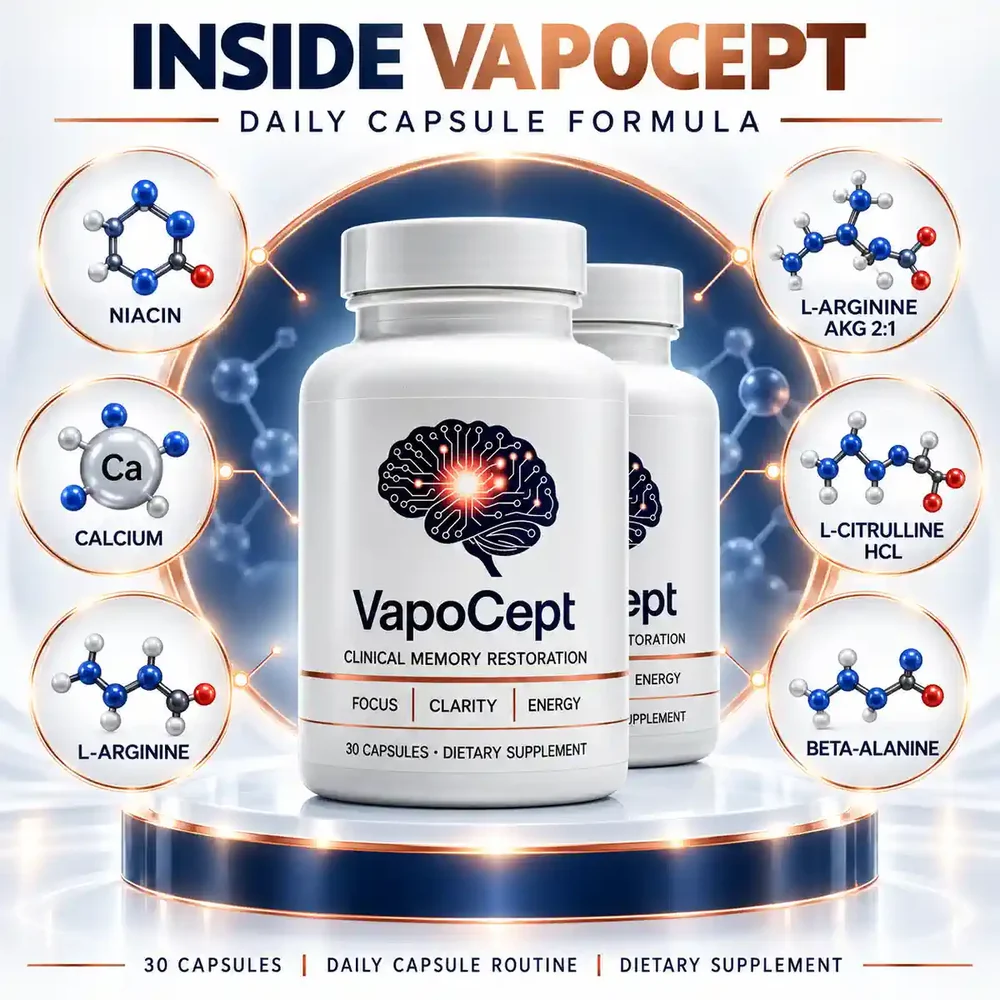
The seller’s published panel names seven ingredients. The “Inside VapoCept” card names six. The “How VapoCept Works” card names the same six. L-citrulline malate appears on the panel text and on neither card. It is a small gap next to the rest of this label’s disclosure, but it is a gap, and the panel is the document that counts.
The row that is on the panel and on neither card
L-citrulline malate is the sixth row of seven, at 100 mg: the same amino acid as the row above it, bound to malic acid instead of hydrochloride. Anyone reading a card rather than the panel will miss that the capsule holds two citrulline salts, which matters when you add them up. 200 mg of citrulline salts is not 200 mg of citrulline, the malate ratio is not printed, and neither free-base share is published.
The pictures
Six ingredient photographs, and the one that is missing
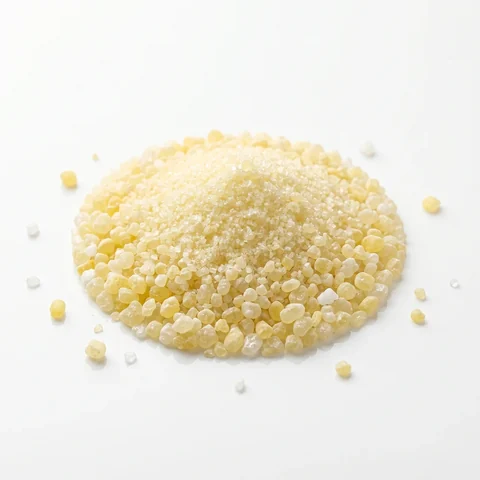
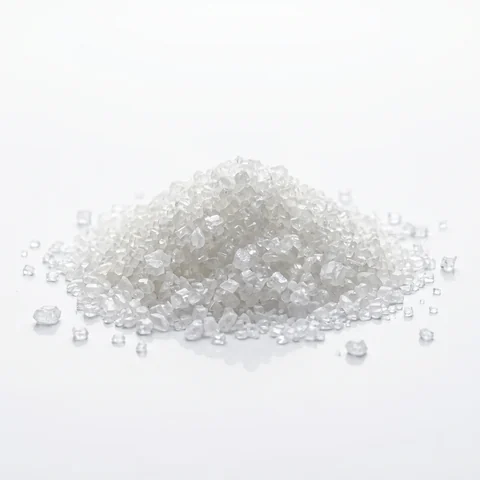
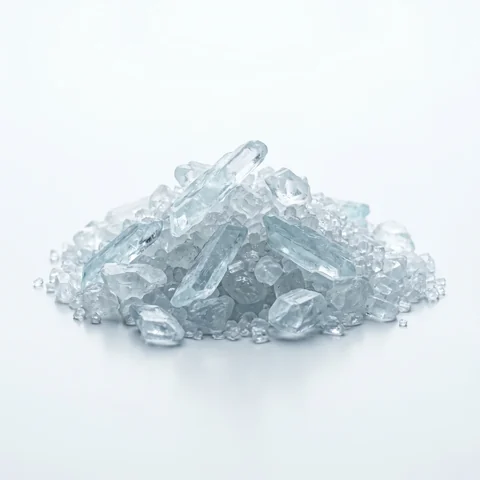
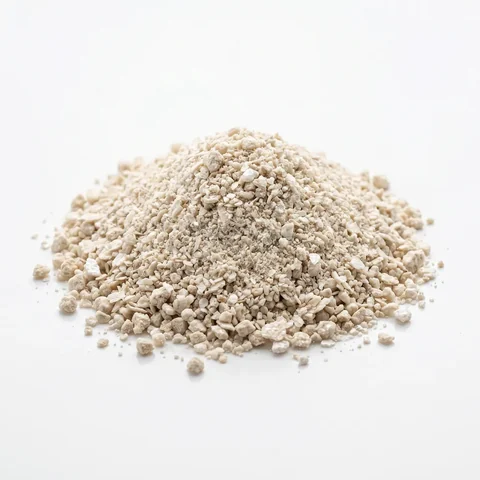
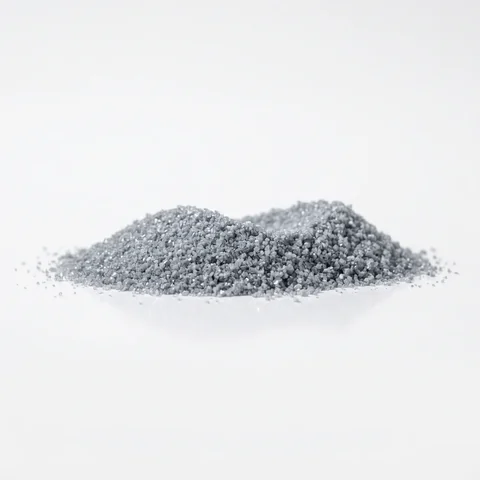
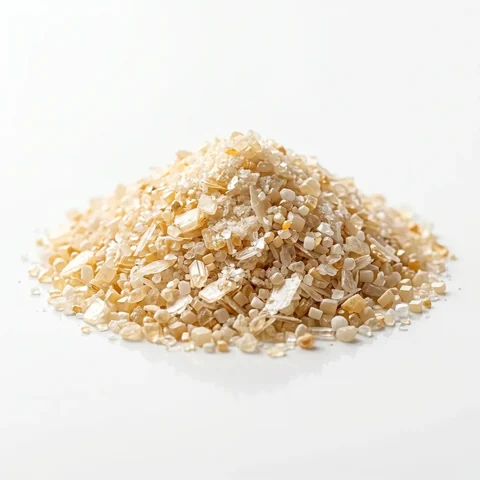
Six stills, one for each of six ingredients. The seller supplied no still for L-citrulline malate, and we have not put the HCl picture in its place because they are different salts. Treat all six as pictures of a raw material rather than evidence about this batch.
Evidence
How many of the seven have a federal page?
Six of the seven have a federal consumer page behind them. Niacin and calcium each have an NIH Office of Dietary Supplements fact sheet. Arginine, both citrulline forms and beta-alanine share a single one, and its title is the most informative thing about this formula anywhere: Dietary Supplements for Exercise and Athletic Performance. L-arginine AKG 2:1 extract has no federal page at all. Read the six in a row and the subject never changes: swimming, team sports, bodybuilding, aerobic activity, bones, turning food into energy. Not one of them is about memory, recall or focus. The mechanism page takes that apart →
Questions
VapoCept FAQ: ingredients questions
Is there a proprietary blend?
No, and that is the best thing about this label. Every ingredient carries its own number, which means you can check each one against a federal reference page yourself. Most products in this category publish a single blend total and leave the split unstated.
What is actually in a VapoCept capsule?
Seven things, all with published amounts: niacin 7.5 mg NE, calcium (as calcium carbonate) 18 mg, L-arginine base 200 mg, L-arginine AKG 2:1 extract 200 mg, L-citrulline HCl 100 mg, L-citrulline malate 100 mg and beta-alanine 40 mg. Added together that is 665.5 mg of declared actives a capsule.
Why do the marketing cards name six ingredients?
Both the “Inside VapoCept” card and the “How VapoCept Works” card name six: niacin, calcium, L-arginine, L-arginine AKG, L-citrulline HCl and beta-alanine. L-citrulline malate is on the published panel and on neither card. The panel is the document that counts, so we publish all seven.
Will I get the beta-alanine tingles?
Unlikely here. ODS associates that tingling with doses of 800 mg or more, lasting 60 to 90 minutes. This capsule contains 40 mg, twenty times under that threshold.
Is there any caffeine in it?
Nothing on the published panel is a stimulant. The seven named ingredients are a vitamin, a mineral and four amino acids. No other-ingredients line was supplied, so that covers the actives rather than the whole capsule.
Where do your ingredient facts come from?
The amounts come from the seller’s published panel text. The context around them comes from the NIH Office of Dietary Supplements, the National Center for Complementary and Integrative Health, MedlinePlus and the FDA. Every page lists its sources with links.
References
Sources for this page
- NIH Office of Dietary Supplements. Dietary Supplements for Exercise and Athletic Performance. ods.od.nih.gov. Accessed September 22, 2026.
- NIH Office of Dietary Supplements. Niacin. ods.od.nih.gov. Accessed September 22, 2026.
- NIH Office of Dietary Supplements. Calcium. ods.od.nih.gov. Accessed September 22, 2026.
Order VapoCept from the official page
30 capsules a bottle, one a day, 665.5 mg of declared actives. Order desk +1 (507) 448-8190.
$158 / $207 / $294 on the listing · 60-day window from purchase · ships from inside the US · sales line +1 (507) 448-8190