VapoCept blog
Published Amounts Versus Proprietary Blends
Printing your numbers is the harder choice, and it is the one that lets a buyer catch you out. That is exactly why it is the right one.
Start here
Two ways to describe what is in a capsule
There are two ways to fill in a Supplement Facts panel, and the choice between them is the most informative decision a manufacturer makes about a label. The first is to declare every ingredient with its own amount beside it. The second is to gather several ingredients under an invented heading, print one total for the group, and list the names beneath it without individual figures. That is a proprietary blend, and it is entirely legal.
Both panels look similar, both are regulated documents, and both had to name every dietary ingredient. The difference appears when you try to do something with them. VapoCept is the worked example here, because it took the honest option and the arithmetic that follows is not flattering.
The legal definition
What a proprietary blend legally is
A proprietary blend is a group of dietary ingredients declared together under a name the manufacturer chose, with a single total weight for the group and no individual amounts.
What it is not
It is not a loophole or a sign of a bad product. The provision exists so a company can develop a formula without publishing a recipe a competitor could copy off the shelf, which is a real concern in a category where the ingredients are commodities.
What it still has to do
Name every dietary ingredient in the blend, print the total weight, and list the names in descending order by weight. The other-ingredients line underneath, carrying the capsule shell and any fillers, sits outside the blend and follows the same rule.
Descending order by weight, and what it rules out
That ordering rule is the one usable fact a blend still gives you. It says the first name is present in a greater weight than the second, the second than the third, and so on: a complete ranking with no quantities attached. It rules out one common kind of misdirection, in that the ingredient the marketing is built around cannot sit at the bottom of the list without that being visible.
What it cannot tell you is anything about the gaps. In a six-ingredient blend totalling five hundred milligrams, the last name could be a hundred and fifty milligrams or it could be one, and the printed order reads identically either way. So the order narrows the possibilities without ever picking one. Treat it as the floor of what a label owes you, not the standard.
The other choice
What a fully declared panel gives you instead
When every ingredient carries its own number, one thing becomes possible that was impossible before: you can compare the label against something outside the label.
A declared amount can be held against the recommended intake for a vitamin or mineral, against the dose range a federal fact sheet says the research used, or against the same ingredient in a different product on equal terms. None of that is available on a blend, and all of it is arithmetic a buyer can do without expertise.
A declared panel does not ask you to trust the manufacturer’s judgement about what is enough. It hands you the numbers and lets you form your own view, including a view the manufacturer would prefer you did not form.
The arithmetic
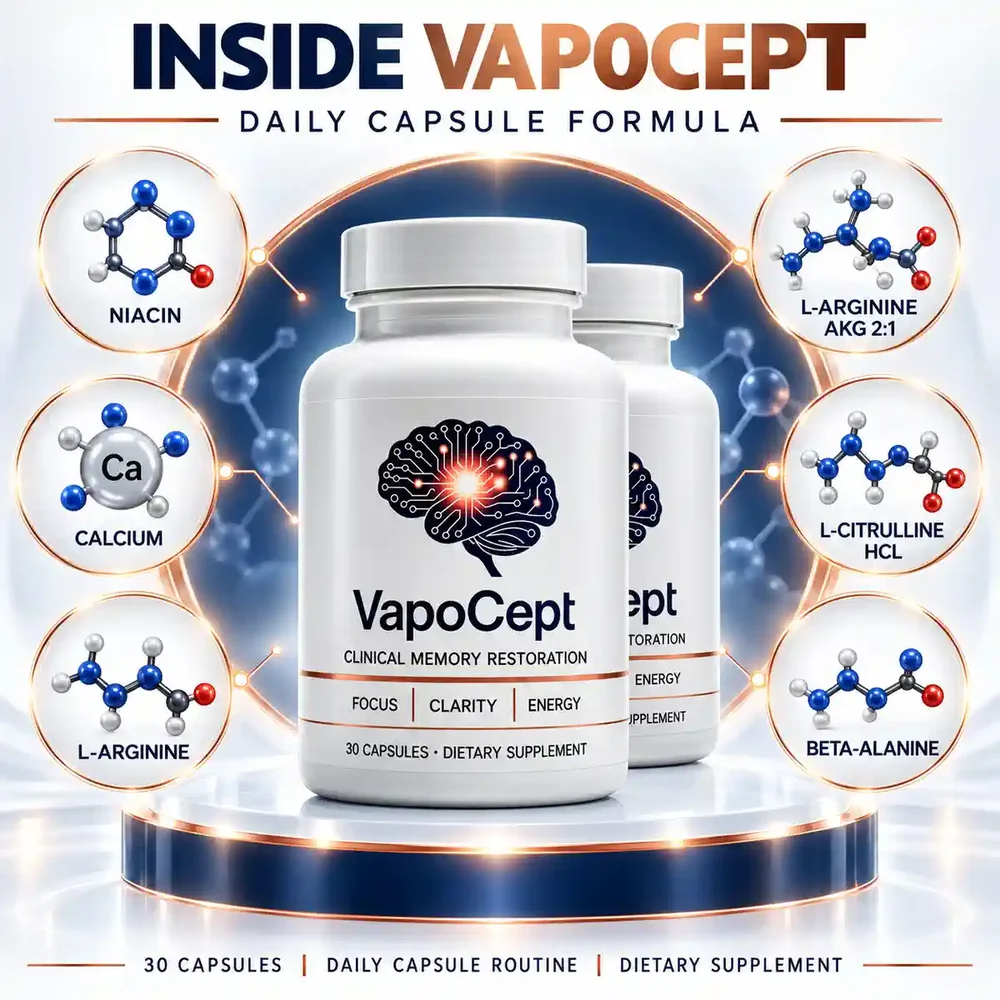
Seven amounts, checked against the research
| Ingredient | In one capsule | Measured against | What that gives |
|---|---|---|---|
| Niacin | 7.5 mg NE | RDA 14-16 mg NE | About half a day’s requirement |
| Calcium (as calcium carbonate) | 18 mg | RDA 1,000-1,200 mg | 1.8% of a day’s requirement |
| L-Arginine (base) | 200 mg | Studied at 2-20 g a day | A tenth of the low end |
| L-Arginine AKG 2:1 Extract | 200 mg | No federal page for this form | About 133 mg of arginine by the printed ratio |
| L-Citrulline HCl | 100 mg | Studied at up to 9 g, or 6 g a day | A sixtieth of the 6 g figure |
| L-Citrulline Malate | 100 mg | Same research as above | Free-base citrulline not published |
| Beta-Alanine | 40 mg | Studied at 1.6-6.4 g a day | A fortieth of the low end |
These seven amounts come from the seller’s published panel text. No photograph of the Supplement Facts panel was supplied to us, so we cannot check them against the bottle the way we would prefer to. Read the panel on the bottle when it arrives, and treat anything printed there as the final word over anything printed here.
Here is the part that only becomes visible because the amounts are printed. Beta-alanine is in this capsule at 40 mg; the NIH Office of Dietary Supplements says it has been studied at 1.6 to 6.4 grams a day, which is forty to a hundred and sixty times as much. The two citrulline forms total 200 mg; ODS describes research using up to 9 grams for one day or 6 grams a day for up to 16 days. The two arginine forms total 400 mg; ODS describes studies of 2 to 20 grams a day for up to 3 months. A label that publishes its amounts lets you do that arithmetic. A proprietary blend does not, and that is the argument for this kind of label even when the arithmetic is unflattering.
Two rows need a note. The arginine AKG line is an extract at a printed 2:1 ratio, so it contributes roughly 133 mg of arginine rather than 200 mg, and the free-base citrulline inside the two citrulline salts is not published, so 200 mg is an upper bound. Both adjustments move the conclusion slightly further in the same direction.
The two nutrients behave differently. Niacin at 7.5 mg NE is about half an adult day’s requirement, a sensible amount and not a problem. Calcium at 18 mg is 1.8 per cent of a day’s requirement, which is a rounding error and should not be read as a calcium supplement in any sense.
Both facts, one decision
Better than most on disclosure, worse than most on dose
The conclusion, as plainly as it can be put. On disclosure this label is better than most things in the category: seven ingredients, seven amounts, no blend, a total of 665.5 mg you can add up and check. On dose it is worse than most, and every comparison in the table above is unfavourable.
Those are not two independent findings that happened to land on one product. They are the same fact seen twice, and the second is visible only because of the first. Put these identical seven ingredients inside a blend called something like “cognitive matrix, 665.5 mg” and the panel would be legal, the product unchanged, and every sentence above about beta-alanine at forty milligrams unwriteable. The label would look better and tell you less.
So the seller is penalised, in a sense, for the thing they did right. That is the incentive that makes proprietary blends as common as they are. A manufacturer who publishes numbers hands every reviewer a stick; one who does not simply cannot be checked, and silence gets read as neutral far more often than it deserves.

Four steps
How to run this on any label
Check for a blend heading
Look for a named group with one total weight and no individual figures under it. If you find one, you already know the ceiling on what this label can tell you.
Write the amounts down
If every ingredient carries a number, copy them out and add them up. On this product the seven amounts come to 665.5 mg in one capsule.
Look up one dose figure per ingredient
The NIH Office of Dietary Supplements publishes fact sheets giving the amounts used in research, and recommended intakes for vitamins and minerals.
Divide, and read the ratio honestly
A label at a third of a studied dose is a different object from one at a fortieth. Neither proves the product does nothing; both tell you whether the research you were invited to think about is research at this amount.
Ten minutes the first time and two afterwards, and it is the most useful ten minutes available to anyone buying in this category. It has a blunt failure mode: on a proprietary blend you cannot start, because step two has nothing to write down.
Closing
Why publishing is still the right choice
None of the arithmetic above is a reason to prefer a label that hides its numbers. It is the opposite. A blend would have protected this product from every criticism in this post while changing nothing about what is in the capsule, and a buyer who chose the blend on that basis would have chosen worse and felt better.
The rule that follows is short enough to carry around: reward the disclosure, judge the numbers. Those are separate judgements, and collapsing them into one is how a market ends up full of panels that cannot be read.
The honest version
This label publishes seven amounts and they are small against the doses the federal pages describe. We would rather say that than soften it, since the argument for this kind of panel collapses if the people who benefit from it will not use it. The ingredients page goes through all seven, and the supplement facts page lists the eight things this label does not publish at all.
References
Sources
- NIH Office of Dietary Supplements. Dietary Supplements for Exercise and Athletic Performance. ods.od.nih.gov. Accessed September 22, 2026.
- NIH Office of Dietary Supplements. Niacin. ods.od.nih.gov. Accessed September 22, 2026.
- NIH Office of Dietary Supplements. Calcium. ods.od.nih.gov. Accessed September 22, 2026.
- NIH Office of Dietary Supplements. Dietary Supplements: What You Need to Know. ods.od.nih.gov. Accessed September 22, 2026.
- U.S. Food and Drug Administration. Information for Consumers on Using Dietary Supplements. www.fda.gov. Accessed September 22, 2026.
Order VapoCept from the official page
Capsules, 30 capsules a bottle, 30 one-capsule servings. All seven amounts are published, and this site works through every one. Prices and the 60-day window are on the listing.
$158 / $207 / $294 on the listing · 60-day window from purchase · ships from inside the US
Next
Keep reading
The whole published panel
Every printed line, and the eight things the label does not publish.
Read it →The seven, one at a time
What each ingredient is, and what the federal page for it says.
Read it →The evidence behind three of them
One federal fact sheet, quoted, with the doses the research used.
Read it →