VapoCept blog
What the Word “Clinical” Means on a Supplement Label
The word is doing work on the front of a lot of bottles. Almost none of it is the work you would assume.
On this page
- What the word is doing on the front
- What the FDA requires before a claim is printed
- Two kinds of claim, and the line between them
- The sentence that is supposed to travel with the claim
- Why a word on a bottle is not a citation
- What the FDA tells consumers about memory cures
- The thirty-second check
- The check, run on this bottle
- What the check does and does not prove
Start here
What the word is doing on the front
Walk along a supplement shelf and you will find the word clinical on a great many fronts. Clinically studied, clinical strength, clinical formula, or the adjective bolted onto whatever the product is sold to do. It reads like a citation, it sits where a citation would sit, and it does a citation’s work in the reader’s head. In almost every case it is not one, and that is a description of how the system is built rather than an accusation about any bottle.
What follows is what the rules require, in the agency’s own words, and a check you can run on any bottle in half a minute. VapoCept is the worked example at the end; everything before it applies to any supplement you pick up.
The rule
What the FDA requires before a claim is printed
Start with the sentence that surprises people. The FDA’s own page describes the claims a supplement label is permitted to carry. These claims “are not pre-approved by FDA, but the manufacturer must have substantiation that the claim is truthful and not misleading and must submit a notification with the text of the claim to FDA no later than 30 days after marketing.”
Nobody approves the wording
There is no desk at which a claim is submitted, reviewed and cleared before printing. The manufacturer writes the words and the bottle ships. A phrase on a front panel has not passed anything.
The seller has to hold the evidence
Substantiation is a genuine obligation, and a company that cannot meet it is exposed. But notice where the evidence lives: in the company’s files. There is no rule that it be published and no register you can search. The absence of a study you can read does not prove there is nothing behind a claim; it means you have not been given a way to find out.
The agency is told afterwards
The notification goes to the FDA no later than thirty days after marketing begins. The product is on sale by the time the agency learns what the label says, and a filing is not an endorsement.
Structure/function vs disease
Two kinds of claim, and the line between them
The regulations draw one hard line, and supplement marketing is arranged around it.
The kind a supplement may make
A structure/function claim may “describe the role of a nutrient or dietary ingredient intended to affect the normal structure or function of the human body, for example, ‘calcium builds strong bones.’” The agency’s own illustration is deliberately modest. Supports, helps maintain, contributes to: these are not weasel words chosen by a nervous copywriter, they are the shape of the only claim this category may make.
The kind it may not
A disease claim says a product can “diagnose, treat, cure or prevent any disease”. Only drugs may legally make one. This is why a label will say it supports memory and will not say it treats memory loss. The gap between those two sentences is a legal boundary, not a stylistic preference.
Where the word clinical sits
Nowhere, formally. It is neither category and it has no defined threshold behind it. It borrows the authority of a word from medicine and spends it on a front panel.
The disclaimer
The sentence that is supposed to travel with the claim
A structure/function claim is not supposed to travel alone. A disclaimer goes with it, and it says what the claim does not mean: “FDA has not evaluated the claim. The dietary supplement product is not intended to ‘diagnose, treat, cure or prevent any disease.’”
In practice this is the sentence you have read a thousand times without reading it: “These statements have not been evaluated by the Food and Drug Administration. This product is not intended to diagnose, treat, cure or prevent any disease.” It is usually set in the smallest type on the package, often beside an asterisk tying it back to the claim on the front. That asterisk is worth training your eye on: its presence tells you the label knows which of its own words are claims. When a phrase that reads like a promise carries no asterisk, and no disclaimer appears anywhere you can see, that is either an oversight or a decision, and from outside the company there is no way to tell which.

The distinction
Why a word on a bottle is not a citation
A citation points at something you can go and read. It names a thing that exists outside the document making the reference, and it survives being checked. The word clinical on a carton points at nothing: no study identifier, no journal, no year, no dose, and no way to tell whether the thing referred to involves the product in your hand.
What a real reference would contain
It would identify the study well enough that you could find it, be about the finished formula or say honestly that it is about one ingredient in isolation, and state the dose — because a trial at three grams tells you nothing about a capsule containing forty milligrams of the same substance.
Why the ingredient list outranks the front
The front is written by marketing. The panel is a regulated form. When the two point in different directions, the panel is the product and the front is the advertisement. None of this makes a bottle carrying the word dishonest; it means the word transfers no information, and should therefore carry no weight.
The consumer update
What the FDA tells consumers about memory cures
The agency has published a consumer update about products sold against memory loss, and its verdict is blunt: “Products claiming to cure or treat Alzheimer’s are a waste of money and may also delay consumers from receiving the necessary care and support.”
Two harms are named, and the second is the serious one. Money is recoverable; the weeks between noticing that something has changed and sitting in front of a clinician are not. NCCIH puts the same point as an instruction: “Don’t use complementary health approaches as a reason to postpone seeing a health care provider about memory loss.”
Four steps
The thirty-second check
Find the asterisk
Look at the biggest claim on the front and check whether anything ties it to a disclaimer: an asterisk, a dagger, a superscript number.
Find the disclaimer itself
Turn the container until you find the small-type sentence saying the statements have not been evaluated by the Food and Drug Administration. If it is nowhere on the packaging, note that and move on.
Ask what the claim word points at
If it implies research, look for a named study, a dose, a reference. If there is nothing to follow, treat the word as decoration.
Read the panel instead
Read the ingredients and the amounts. That is the part of the package that had to be true.
Note what the check never asks you to do. It does not ask you to judge whether a claim is true, only whether the label has given you any means of finding out — a question you can answer standing in a shop.
Worked example
The check, run on this bottle
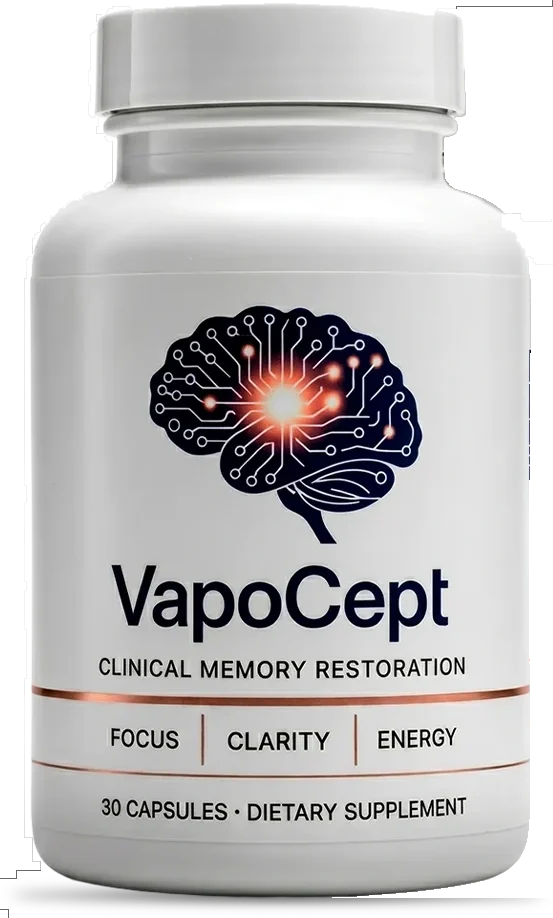
The front of the VapoCept bottle carries four lines: the wordmark, “Clinical Memory Restoration” in capitals, “FOCUS | CLARITY | ENERGY”, and “30 CAPSULES · DIETARY SUPPLEMENT”.
One. Those four lines, a brain-circuit graphic and two copper rules are the whole of the front of the bottle. There is no asterisk beside any line, and there is no FDA disclaimer on the front in any shot we were given.
Two. No disclaimer is visible on the front in any supplied photograph, and we have no back-of-bottle shot, so we cannot say whether it appears elsewhere. That is recorded as a gap on the supplement facts page.
Three. The word points at nothing we can follow: no trial of this formula was supplied, and none has been published that we can find.
Four. The panel is unusually good: seven ingredients, seven amounts, no blend, 665.5 mg in a one-capsule serving. It is worked through on the ingredients page.
Closing
What the check does and does not prove
Be careful what that result means. It does not show that the seller holds no substantiation, that the claim is false, or that the capsule does nothing. It shows one thing: the word gives you nothing to verify. What can carry weight is the panel. If you are buying this because of the words on the front of the bottle, read the ingredient list first. If you are buying it as an arginine-and-citrulline capsule, the amounts are printed and you can judge them yourself - which is more than most labels in this category allow.
The honest version
A supplement label is two documents on one container, and only one of them is checked. If memory is the reason you are reading any of this, the useful next step is a conversation with a clinician rather than a purchase.
References
Sources
- U.S. Food and Drug Administration. Structure/Function Claims. www.fda.gov. Accessed September 22, 2026.
- U.S. Food and Drug Administration. Watch Out for False Promises About So-Called Alzheimer’s Cures. www.fda.gov. Accessed September 22, 2026.
- National Center for Complementary and Integrative Health. 7 Things To Know About Dietary Supplements for Cognitive Function, Dementia, and Alzheimer’s Disease. www.nccih.nih.gov. Accessed September 22, 2026.
- NIH Office of Dietary Supplements. Dietary Supplements: What You Need to Know. ods.od.nih.gov. Accessed September 22, 2026.
- U.S. Food and Drug Administration. Information for Consumers on Using Dietary Supplements. www.fda.gov. Accessed September 22, 2026.
Order VapoCept from the official page
Capsules, 30 capsules a bottle, 30 one-capsule servings. All seven amounts are published, and this site works through every one. Prices and the 60-day window are on the listing.
$158 / $207 / $294 on the listing · 60-day window from purchase · ships from inside the US
Next
Keep reading
The seven, with amounts
What is actually in the capsule, line by line, against the research doses.
Read it →Every seal on this packaging
What a GMP mark and a registered-facility roundel do and do not certify.
Read it →What the research says
The federal fact sheet that covers three of these ingredients, quoted.
Read it →